Water first: a drained subdivision and a water table at the lid
Gulf American Land Corporation drained this land in order to sell it. Few homes went up at first, partly because summer water stood high. The canals dug to drain the land later hurt the Picayune Strand. The Picayune Strand State Forest today covers 78,000 acres, including the old South Golden Gate Estates tract, and most of it is under water in the wet season. It's your neighbor, so water is the first design question on any lot out here.
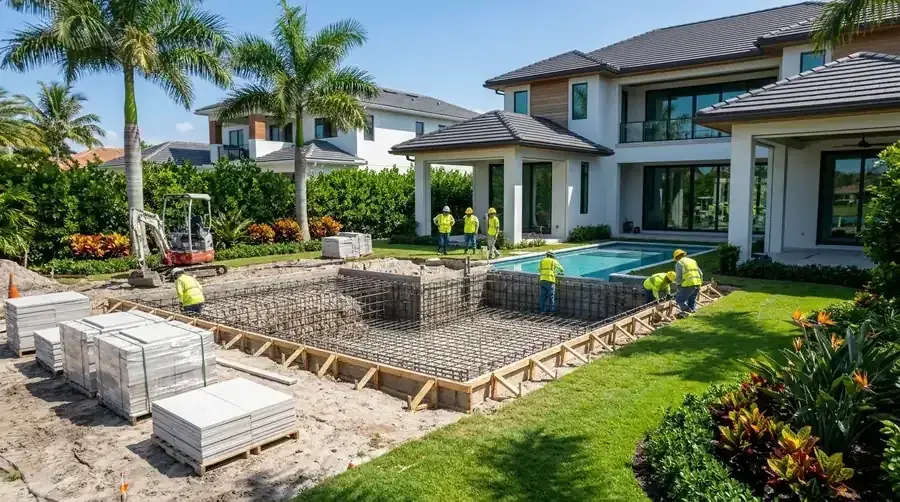
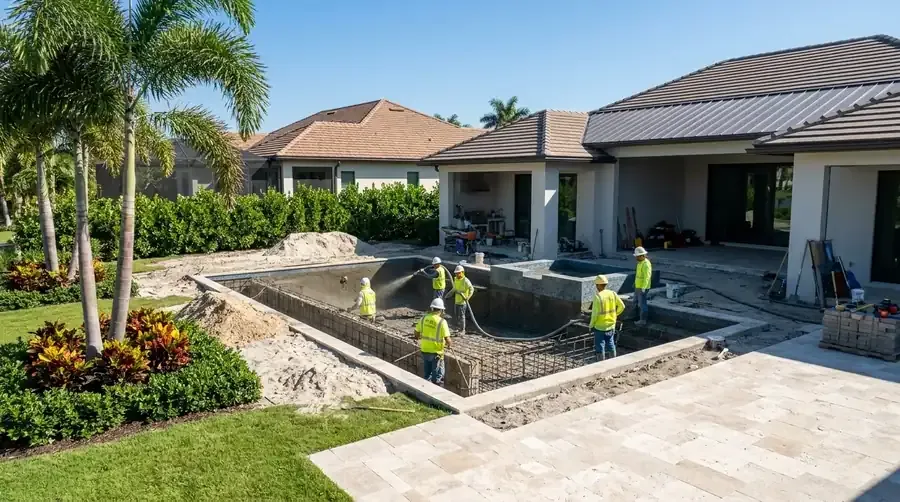
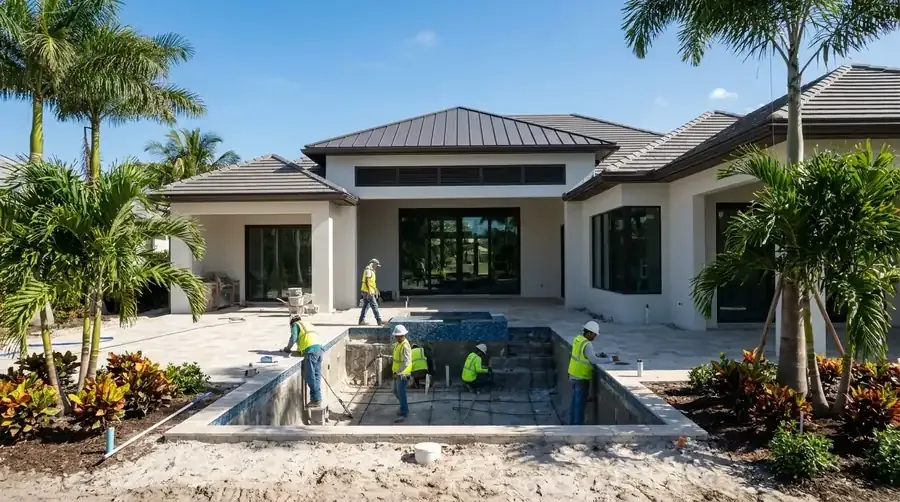
The soil map at a northern Estates sample point reads Boca fine sand, an NRCS series that is poorly to very poorly drained and formed over limestone. By its description, the water table stays within 12 inches of the surface for 4 to 9 months in most years, with ponding for 3 to 6 months in depressions. Your lot may read differently. The empty shell sits in that water, so we plumb an approved hydrostatic relief device into the build, as the Florida Building Code requires for areas with a high water table.
Long runs and far equipment: why the TDH sheet matters more here
On a larger lot the equipment pad can end up a long way from the shell. Longer pipe costs the water pressure to friction, and the county's TDH calculation is where that loss shows. Collier wants those hydraulic figures along with the pump's make, model, horsepower and manufacturer's curve, so a pump picked for a short run may not match the numbers on a long one.
Distance hits the electrical side as well. The site plan has to show clearances to power lines, plus property lines, setbacks, easements and water bodies, so we mark where the lines run before placing the pad or the shell. Wire and pipe cost money by the foot, and longer runs show up in your estimate as their own lines. What a longer run does to the number is in our pool cost guide.
Clearing, stormwater and the septic line on one permit
A larger lot can bring extra county items into the build. On lots with a one- or two-family home, Collier may ask for a Storm Water Plan, though some lots are excepted, such as those under an SFWMD permit. When the lot is one acre or more, a Vegetation Removal Affidavit can be required. Up to one acre of vegetation may come off once the single-family building permit is issued, and clearing beyond that takes a Vegetation Removal Permit.
Then there's septic. Florida Administrative Code 62-6.005(2) puts the shell at least 5 feet from the septic system, and the site plan must show that distance. Past 400 sq ft of new impervious area, the plan needs the stamp of a Florida surveyor, architect or engineer, dated within 6 months. Have your surveyor mark the tank, the field and the power lines in one visit. The City of Naples, Lee County and Charlotte County run their own checklists, so a friend's permit story from there won't match yours.
The northern and southern halves are not the same map
FEMA's flood map shows Zone X, minimal flood hazard, in parts of the northern Estates. The southern part, where the old Picayune Strand lots sit, is a much wetter area, so a neighbor's zone says little about yours. Look up your parcel on FEMA's national flood hazard layer, then take it to Collier's Floodplain Management Section, which publishes elevation certificate and building-standard guidance. Ask about an elevation certificate before any deck height is set.
The county's pool application may also list a Preservation Review Form in the Rural Fringe Mixed Use District. Before you finalize a layout, ask the county if your parcel sits inside that district. We can't read that off a map for you.
A cage on open ground
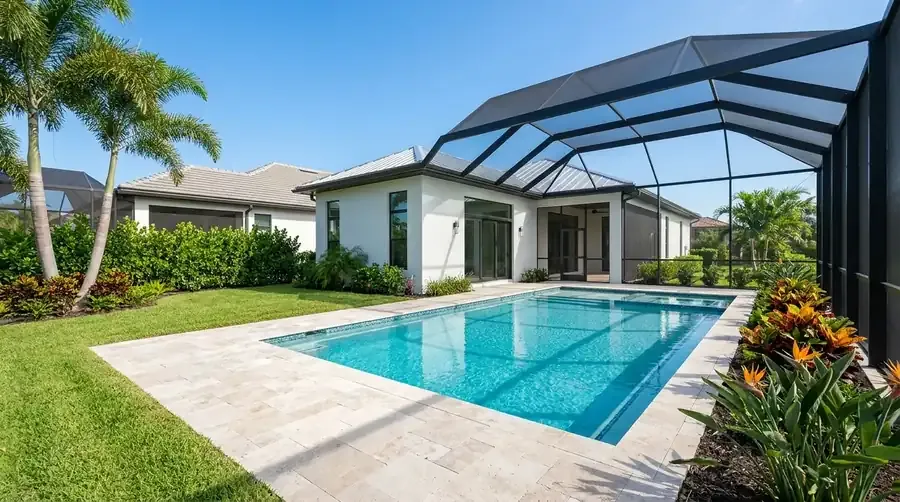
A screen enclosure over the water takes its own county permit, the aluminum structure application (PRAS), with construction plans and a site plan. An enclosure over a separately permitted pool ends with a final spot survey noting the screen-enclosed area. The county sets its minimum design wind speed at 150 mph, reaching 170 mph in some regions, and the frame is engineered to it. Vinyl, glass or acrylic panels have to be removable, and each carries a decal telling you to pull them out when winds exceed 75 mph.
The code details are in our screen enclosure hurricane code guide. The community next door has its own ground and lots, covered on the Golden Gate page. If the cage is still a someday idea, price it now and build it later, since its permit and survey notes differ from the shell's.
New pool construction in Golden Gate Estates: price ranges and a walk of the lot
Here is how our Southwest Florida ranges line up for an Estates build. A gunite pool built to order is $65,000 to $150,000+. Put a 15 by 30 to 20 by 40 shape with a standard deck on it and you land at $75,000 to $120,000. High-end work spans $150,000 to $350,000+. A cage over the water is quoted apart at $15,000 to $35,000 for a typical job. These are ranges only, and the free estimate is written once we've walked your lot.
For new pool construction in Golden Gate Estates, bring your survey, your flood lookup and a note of where the septic, and any well, sits. Call (239) 899-6371 or use the contact page to reach a custom pool builder who will walk the lot. The area overview is on our Golden Gate Estates pool builders page, the whole job is on the new pool construction overview, and if you already have a shell, look at pool renovation in Golden Gate Estates.
Sources
- Picayune Strand State Forest, Wikipedia
- Boca series Official Series Description, USDA NRCS
- Pool (PRSPL) application requirements, Collier County Growth Management
- Aluminum Structures (PRAS) application requirements, Collier County Growth Management
- Collier County Floodplain Management, Collier County
- National Flood Hazard Layer, FEMA
- 2023 FBC-Residential, Section R4501, ICC Florida Building Code via UpCodes