Limestone below, water above: what the dig meets
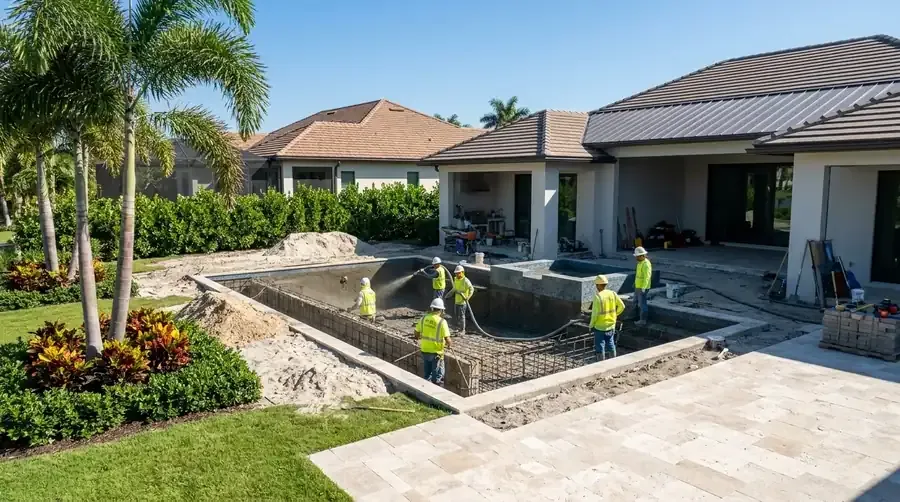
In NRCS's description, Boca fine sand is a sandy and loamy soil over limestone. The water table stays within 12 inches of the surface for 4 to 9 months in most years. It may not be your soil. We check on site which series is under your lot. What it tells us is where to look: rock close below the sand and water close above it.
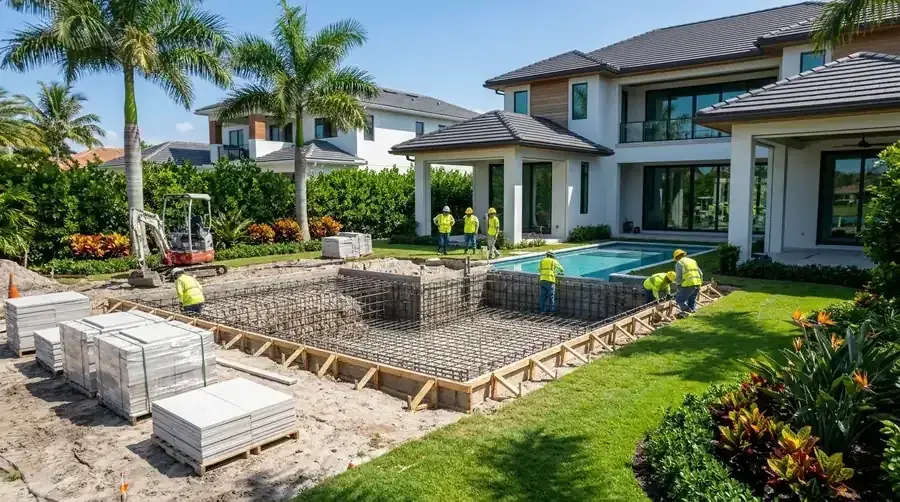
Each one changes the job. Limestone slows an excavator, so the dig becomes a line item. Water in the hole has to be pumped out before any steel goes in. An empty shell also wants to float in wet ground, so the hydrostatic relief device from the Florida Building Code (section R4501.21.4) goes on the plans from day one. If you can, have us walk the yard in the wet season, because standing water tells us more than any map.
The county asks for more. Lee County's pool guide wants signed and sealed engineered plans with hydraulic calculations, and suction outlets identified to ANSI/ASME A112.19.8. We submit the plans and calculations together, so it's one package instead of three.
A built-out neighborhood: finding room for a shell
Cypress Lake sits 7 miles south of Fort Myers on 4.0 square miles, with McGregor to the west, Whiskey Creek to the north and the Villas to the east. Residents numbered 13,727 in the 2020 census, up from 8,721 in 1980. That's a lot of houses on 3.9 square miles of land, and a new shell has to fit beside the one already there.
The survey comes first. For the shell, Lee County wants a plot plan along with a cross section and a plan view. We lay the shell on your survey and mark the setbacks, easements and house corners. Then the locate. After your Sunshine 811 notice, utility owners mark their lines to within 24 inches on either side, and on a built-out street those marks land close to where the shell wants to go. We put them on the drawing.
Cypress Lake is unincorporated, too, so Lee County issues your permit, not the City of Fort Myers. Fort Myers runs its own checklist, which doesn't cover your lot. Mix up the two offices and a good plan lands in the wrong inbox.
Footing to final: the Lee County clock on a new shell
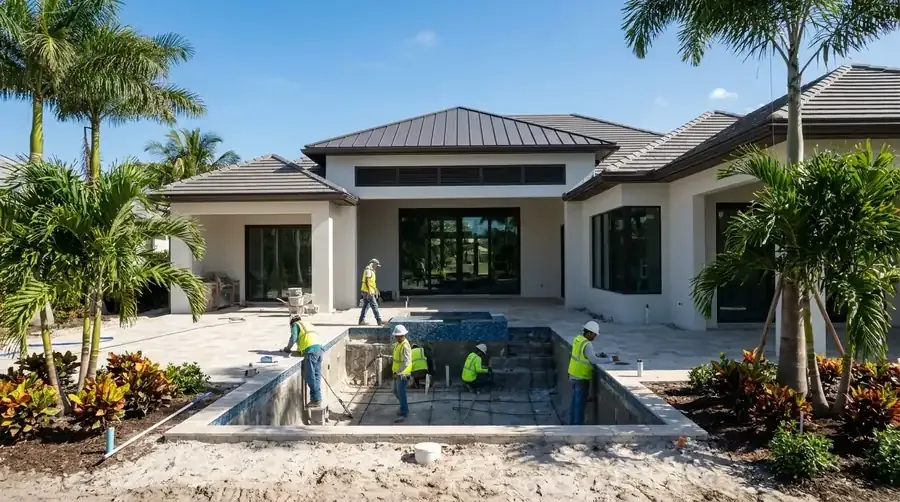
Before the county issues the Residential Pool permit, you record a Notice of Commencement with the Clerk of the Circuit Court. A new shell then gets four inspections: footing, steel plus bonding, deck plus bonding, and the final. The permit lapses if no inspection passes within 180 days of issue, so the footing goes in soon after the permit does. We book the footing inspection before the dig starts.
Bonding is inspected twice. Section R4501.16 of the Florida Building Code points pool wiring, bonding and grounding to Chapter 27. We schedule the electrician ahead of the steel inspection so the two stops don't collide.
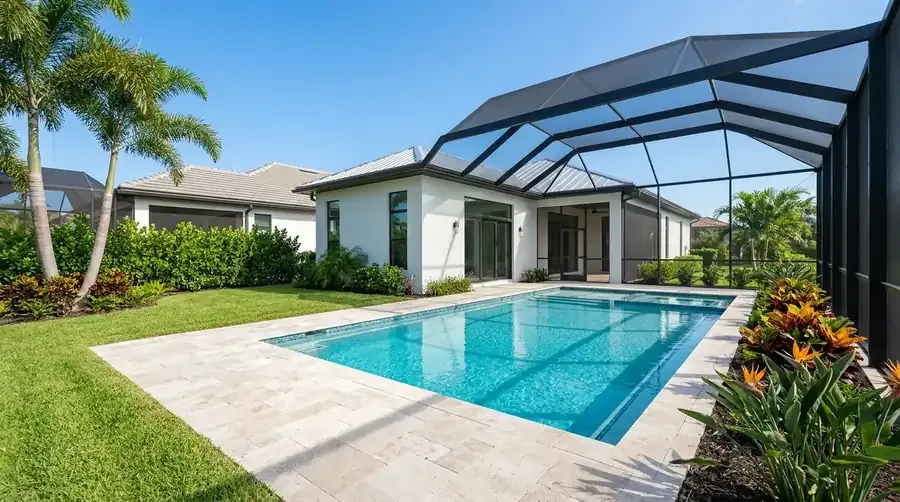
At the end, the barrier has to be standing, and the final electrical and barrier inspections have to pass before the water goes in. The shared steps are in our permits guide, and our screen enclosure guide covers a cage as the barrier. Pick the barrier before the plans are final, since it changes the drawings.
Wet-season digging and the hurricane calendar
A shallow water table and a wet summer make a bad pair for an open excavation. Southwest Florida's wet season runs May through October, with frequent thundershowers, per Wikipedia's Naples entry. Hurricane season is June 1 to November 30 and peaks around September 10, according to the National Hurricane Center.
You can still build in summer. The plan just has to expect water. The pump stays on the job, we cover the open hole when rain is coming, and we tell you what moved. Or do the permit and survey work in summer and let the dig wait for drier ground. At the estimate we'll show you both calendars.
The last week of new pool construction matters as much. The water goes in once the final passes, so the electrician, the barrier and the inspector all have to line up before the last coat. A gap there costs days when afternoon storms roll in, and we plan the week to avoid one.
New pool construction in Cypress Lake: ranges and next step
Typical Southwest Florida ranges: a custom gunite pool runs $65,000 to $150,000+, and a 15 by 30 to 20 by 40 with a standard deck lands at $75,000 to $120,000. The cage is priced apart. Rock and pumping get their own lines in the free written estimate, so you see what the ground itself costs and can compare one bid against another.
Send your survey, a few back yard photos and the street name. Neat isn't required. We'll sketch what fits for new pool construction in Cypress Lake before you pay for drawings. The whole job is on our new pool construction page, the neighborhood overview is on our Cypress Lake pool builders page, and the numbers are in our pool cost guide. We build in Lee County, Collier County and Charlotte County. Call (239) 899-6371 and we'll pick a time to walk the yard together. Bring your rock and water questions.
Sources
- Pool (Residential and Commercial) Application and Permitting Guide, Lee County Community Development
- Boca Official Series Description, USDA NRCS
- Cypress Lake, Florida, Wikipedia
- Lee County, Florida, Wikipedia
- 2023 FBC-Residential, Section R4501, ICC Florida Building Code via UpCodes
- F.S. 556.105 Procedures, Florida Legislature
- Tropical Cyclone Climatology, NOAA National Hurricane Center
- Naples, Florida, Wikipedia