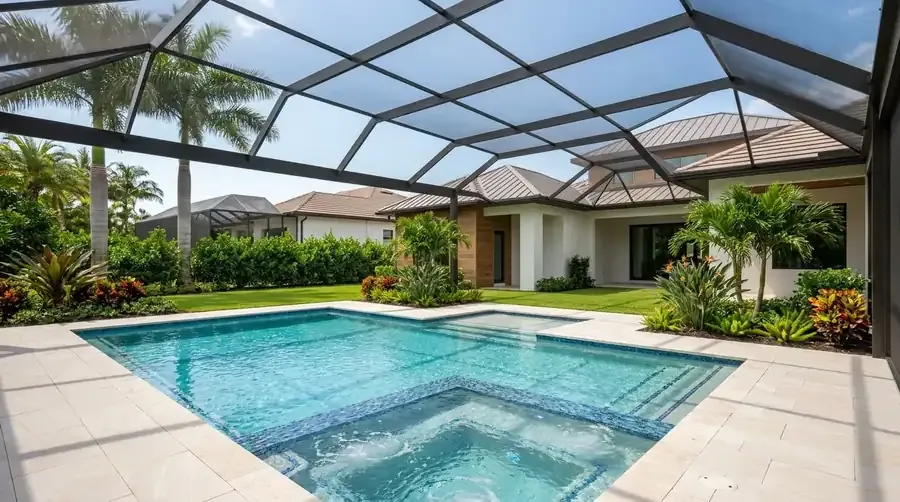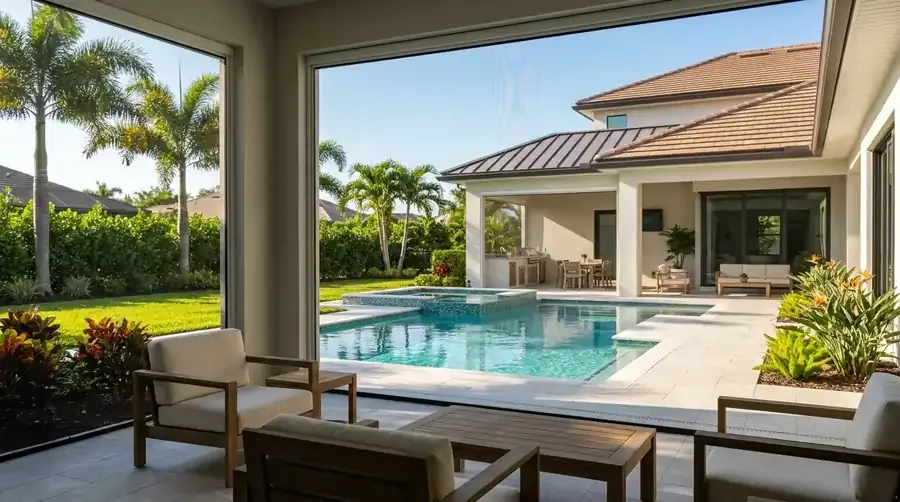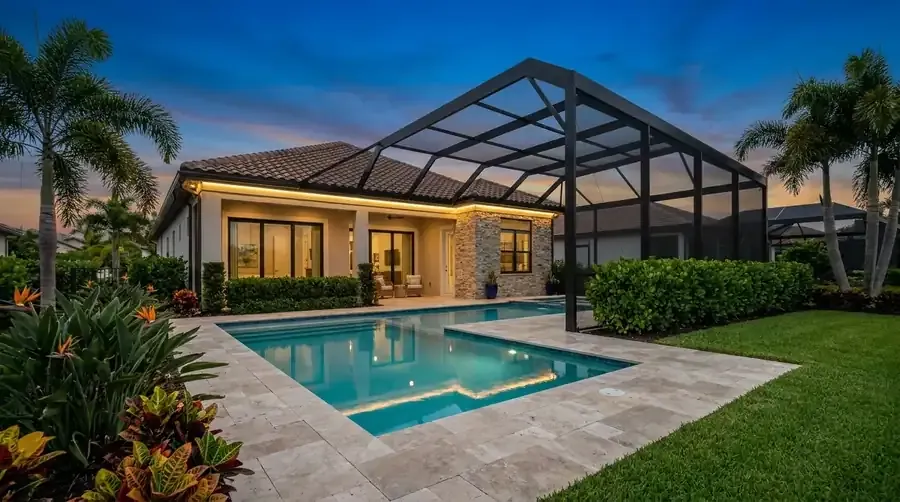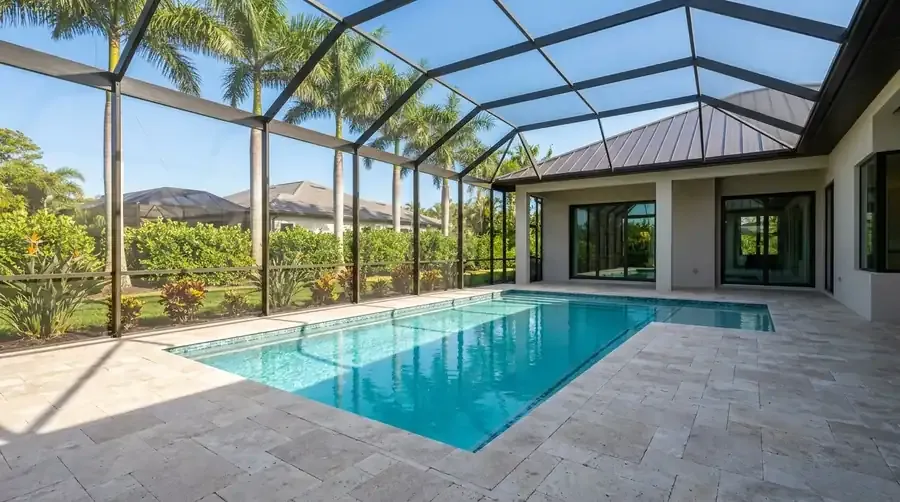
Screen enclosures in Captiva answer to Lee County, not Sanibel
Captiva is a census-designated place covering 1.64 square miles at about 7 feet of elevation. The 2020 census counted 318 residents, down from 583 in 2010. Storm surge from a hurricane cut Blind Pass in 1926 and split Captiva off as its own island, and dredging reopened that channel in 2009. Sanibel sits right across Blind Pass, yet screen enclosures in Captiva run on a different permit system.
Captiva is unincorporated Lee County, so Lee County Community Development issues the permit through its eConnect portal. Lee's pool guide says every pool needs an enclosure (a fence, wall, screen enclosure or similar structure), that the enclosure gets its own permit, and that the barrier must be installed by final inspection. For the City of Sanibel side, with its own office and forms, see our screen enclosures in Sanibel page.
Pool cage companies and the barrier island vegetation permit
Lee County's guide also asks for a vegetation removal permit on property over 5 acres, and on any barrier island regardless of size. Captiva is a barrier island. Opening a path for the crew, pulling a shrub where a column belongs, or thinning plants along the lanai edge can all fall under that permit. Ask the permit office what counts at your address before anyone picks up a saw.
Shopping pool cage companies? Ask each where the footings land and what gets cleared to put them there. Our process: mark column positions on your survey, photograph the plants beside them, and ask Lee County about the permit before the schedule is set. A new pool and cage built together share that conversation, and our new pool construction in Captiva page shows how the two go on one calendar.
Charley, Ian and what a Captiva frame has to carry
Charley hit in 2004 and left an early count of 160 buildings destroyed and another 160 seriously damaged on the island. Ian followed in 2022 with sustained winds of 150 mph, and it damaged the causeway and island infrastructure. A Captiva pool cage gets built with that history in mind. The Florida Building Code sets a floor of 0.040 inch for the actual wall thickness of extruded aluminum members, and a table in Chapter 20 gives the wind pressures. Take 150 mph in open terrain: the table shows 43 pounds per square foot on the windward screen surface. That's an example only. Your sealed drawing uses the speed and exposure for your address.
Vinyl, glass and acrylic panels must come out, and a decal tells you to remove them above 75 mph. Our hurricane code guide reads the table out in plain words.
Canaveral sand, the Erosion Prevention District and the state line
Canaveral sand, according to the Natural Resources Conservation Service, forms on low, dune-like ridges along the coast, with a water table 10 to 40 inches down for two to six months (series description). A soil report, not a map, tells you what's under your lot. Where the water sits close to the surface, footing holes fill, so we dig, set steel and pour in one visit, with Sunshine 811 called first.
Two more layers sit above the lot. The Captiva Erosion Prevention District covers the whole island and reaches 300 feet into the Gulf and Pine Island Sound. The Legislature created it in 2000, and it can tax and regulate erosion-prevention projects, so a call makes sense for a cage on the beach side. Gulf-front parcels face another gate: construction seaward of the state's Coastal Construction Control Line needs a permit from the Department of Environmental Protection. Ask FDEP where the line crosses your lot before we draw.
Custom pool cages, designs and replacement: what a quote should list
Custom pool enclosures on Captiva begin with the lot, and the design follows. Mansard, gable and picture-window frames each have their own footprint and height, so pool cage designs are priced as well as drawn. Any pool enclosure builder or pool enclosure contractor can quote them. Check that every quote names sealed engineering, the Lee County permit, the vegetation question and the door hardware, because salt air is hard on metal fittings.
A pool cage replacement takes the same permit path as a new cage, so all screen enclosures in Captiva go through Lee County. Commercial pool cages and commercial pool enclosures for island rental pools get a quote after we read the association rules and the plans. Rescreening a sound frame costs $3 to $6 per sq ft, so 800 sq ft is $2,400 to $4,800. A new 800 sq ft cage at $9 to $16 per sq ft is $7,200 to $12,800. The whole job is laid out on the screen enclosures service page.
Get screen enclosures in Captiva, FL priced from your yard
Want screen enclosures in Captiva, FL priced from your yard? Send the address, say whether the lot faces the Gulf or the bay, and attach photos of the lanai plus any older permit drawings. After a visit and measuring, you get a free estimate listing the frame, doors, screen, engineering and the Lee County permit on separate lines. The Captiva town page shows more of the island, and pool resurfacing in Captiva covers the shell. Collier County and Charlotte County work differently again, so each job goes to the office that owns the address. Call (239) 899-6371 or use the contact page.
Sources
- Captiva, Florida, Wikipedia
- Pool Application and Permitting Guide, Lee County Community Development
- Canaveral series description, USDA NRCS
- HB 927 (2000), Captiva Erosion Prevention District, Florida Legislature
- Coastal Construction Control Line, Florida DEP
- 2023 FBC-Building, Chapter 20 Aluminum, ICC / UpCodes