Pool resurfacing in Bonita Beach, on an island between the Gulf and Estero Bay
Bonita Beach is the piece of Little Hickory Island inside the City of Bonita Springs. A road reaches this barrier island, which lies between the Gulf and Estero Bay, where the Imperial River empties. It sits at the end of Bonita Beach Road in ZIP 34134. Bonita Beach Park takes up 2.5 acres of beachfront and has a swim area, a boardwalk, 8 picnic shelters and a gazebo.
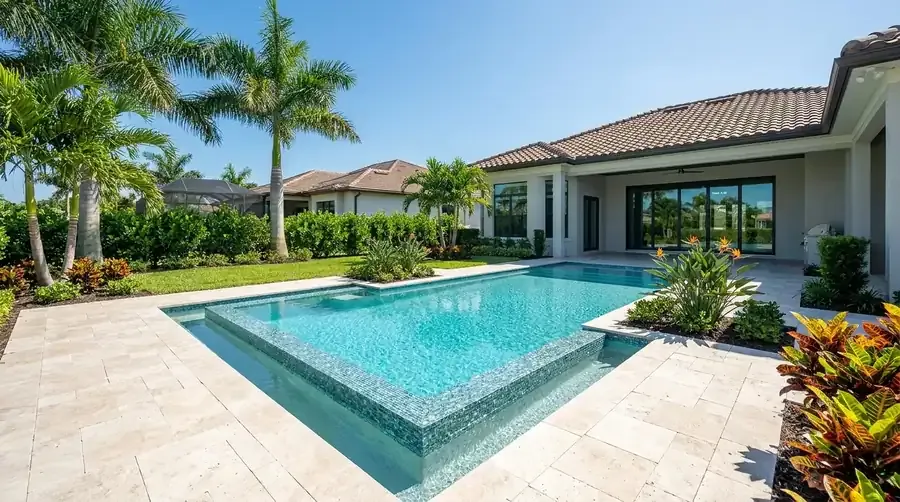
Luxury condos stand steps from the sand, and single-family homes with bay views fill in behind. A listing on Hickory Boulevard shows a 2019 house of 6,543 square feet, which tells you new builds stand next to older ones. Nobody can name the shell behind a given house from the street. We read yours.
Two questions come first. Do you own the pool, or does an association? And are you on the Gulf side or the bay side? What you tell us decides the paperwork and the dates. The rest of our work on the island is on the Bonita Beach page.
AE and VE: reading the island's flood zones before a drain-down date
FEMA's map returned two different zones across three points on the island. Zone AE, a coastal floodplain, showed up at two points, each with a base flood elevation field of 11.0 feet. At the Gulf-side point the zone was VE, and the base elevation field said 16.0 feet. All three count as special flood hazard areas.
Under 44 CFR 59.1, a coastal high hazard area is one subject to high velocity wave action, and VE zones fall among the special hazard areas. Those readings come from points, not from your lot. Look yours up on FEMA's flood hazard layer.
On a resurface, the zone leaves the finish alone. What it changes is which questions the city asks and how we handle the calendar. Bonita Springs keeps a Flood Protection page, and the city is also who tells us what a resurface at your address needs. Once a list grows past the surface, FEMA's substantial-improvement test comes into play, comparing cost against 50 percent of the structure's market value. We flag that early, so it never lands halfway through the job.
The state's beach line and Lee County's rule number
F.S. 161.053 puts resurfacing on the list of projects DEP may handle by general permit seaward of the coastal construction control line, alongside decks, fences, landscaping and minor pool repairs. Notice has to reach DEP at least 30 days before work begins. Chapter 62B-34 of the Florida Administrative Code holds the county-specific lines, and for Lee County that's Rule 62B-34.150, tied to the recorded line map.
Local governments have a duty under the same statute: within 5 days of receiving a permit application seaward of the line, they advise DEP and tell the applicant a state permit is required. Once a permit application lands at the city, the state can hear about your resurface before you've called it.
To protect nesting sea turtles and hatchlings, DEP may set the nature, timing and sequence of permitted work. A street name can't tell us if your lot is seaward, but the DEP control line program can answer for your address. That lookup comes before any date on paper, because a 30-day notice can move a calendar.
A soil map that shows only water, and a drain plan that starts on site
All three points tried on the island came back from the soil lookup as "Waters of the Gulf of America." Put simply, the map names no soil series for these lots, so there's no NRCS water table depth to give you. A map can't tell anyone what your ground is doing.
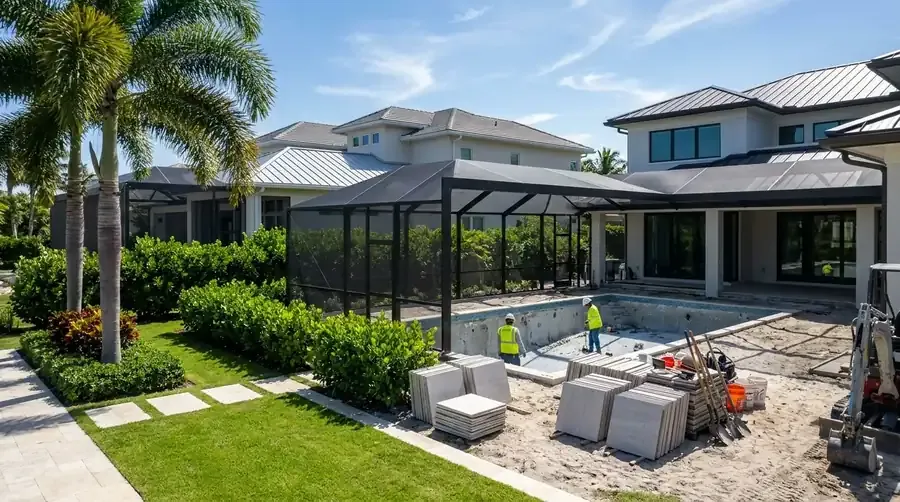
We read it at your house instead. The Florida Building Code, Residential, requires an approved hydrostatic relief device where a water table is anticipated (R4501.21.4). We inspect it before any water leaves the shell, then run the pump, watch how the water responds and lower the level in stages.
The calendar counts too. In 2017, Hurricane Irma's eye passed over Bonita Springs. Atlantic season, per the National Hurricane Center, runs June 1 to November 30 and peaks around September 10. A named storm tracked toward Lee County moves the drain-down date, because an empty shell can't wait.
Book pool resurfacing in Bonita Beach with the city and the line checked
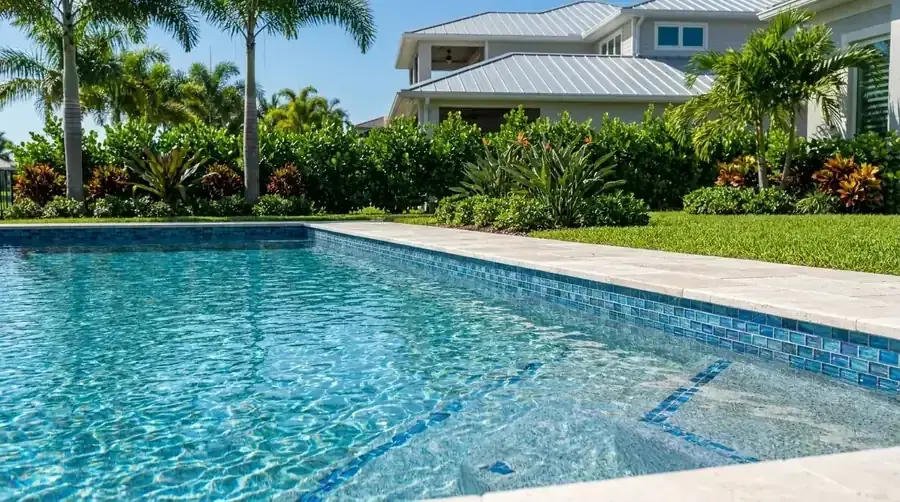
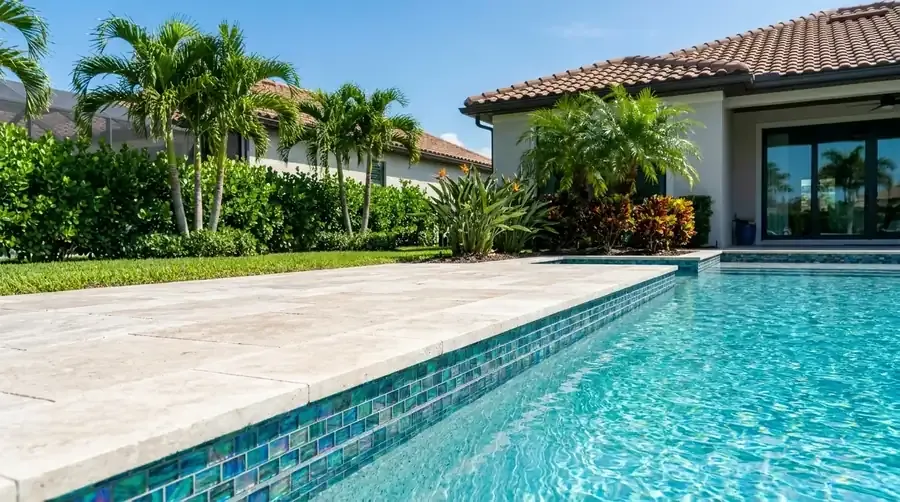
For pool resurfacing in Bonita Beach, a typical job runs $6,000 to $16,000. Glass bead, or a large shell in any finish, runs $14,000 to $20,000. Pool plaster, the smoothest finish, takes the low end, and quartz and pebble fill the middle. Glass bead catches light differently from sand or stone, so check a wet sample in sun and in shade before you decide. After our visit, your free written estimate lists the finish by product line and color, the tile and coping scope and whether the state's notice applies.
If an association owns the pool or approves exterior changes, bring it in early and get its requirements to us in writing. The finishes guide compares all four finishes. A longer list belongs on the Bonita Beach renovation page, and the mainland side is on the Bonita Springs page.
F.S. 713.13 says the owner records a Notice of Commencement before work starts on improvements over $2,500, and we explain the form. Our crew serves Collier County, Lee County and Charlotte County. Call (239) 899-6371 or use the contact page.
Sources
- How do I apply for a building permit, City of Bonita Springs
- F.S. 161.053 Coastal construction and excavation, Florida Legislature (flsenate.gov)
- Coastal Construction Control Line Program, Florida Department of Environmental Protection
- National Flood Hazard Layer, FEMA
- 44 CFR 59.1 Definitions, U.S. Code of Federal Regulations (Cornell LII)
- Florida Building Code, Residential, Section R4501, ICC Florida Building Code text via UpCodes
- Tropical Cyclone Climatology, NOAA National Hurricane Center
- F.S. 713.13 Notice of commencement, Florida Legislature (flsenate.gov)
- Bonita Springs, Florida, Wikipedia
- Bonita Beach real estate, Naples Condo Boutique